
Search Engine, DuckDuckGo, and Qwant: Organizing the Web
A search engine is an online tool that helps users find information on the internet (the web). When you type something into Google — like “json parser online” or “best SEO tools” — a search engine scans billions of web pages and shows you the most relevant search results.
Google, Bing, Yahoo, DuckDuckGo, and Qwant are all examples of search engines.
👉 Search Engine = A software that searches the internet for users and delivers relevant content, videos, and news.
How a Search Engine Works (Google Search Process)
A search engine works in three main steps, which are crucial for any successful SEO strategy:
- Crawling: Search engine bots (called crawlers) scan websites and collect data from millions of pages.
- Indexing: Collected web pages are stored in a large database called the index.
- Ranking: When a user searches, algorithms rank relevant pages based on relevance and authority.
Popular Search Engines: Privacy-Focused Options
While Google dominates global search, other search engines focus on privacy and unbiased results.
- Google: Most popular search engine with advanced indexing and advertising-based monetization.
- Bing & Yahoo: Major competitors offering alternative search ecosystems.
- DuckDuckGo: Privacy-first search engine that blocks tracking and does not store user data.
- Qwant: European search engine emphasizing privacy and non-personalized search results.
- Yandex & Baidu: Leading search engines in Russia and China.
What Search Engines Look For (SEO Ranking Factors)
Search engines use multiple ranking factors to determine which pages appear at the top of search results:
- Keyword relevance to the search query
- High-quality and in-depth content
- Page loading speed and user experience
- Backlinks and domain authority
- Mobile optimization
- Overall website trust and credibility
Conclusion
A search engine is an essential system that helps users discover information online by crawling, indexing, and ranking web pages. Whether it’s Google focusing on comprehensive results or DuckDuckGo and Qwant prioritizing user privacy, search engines shape how we explore the internet. Without them, finding relevant content would be nearly impossible.
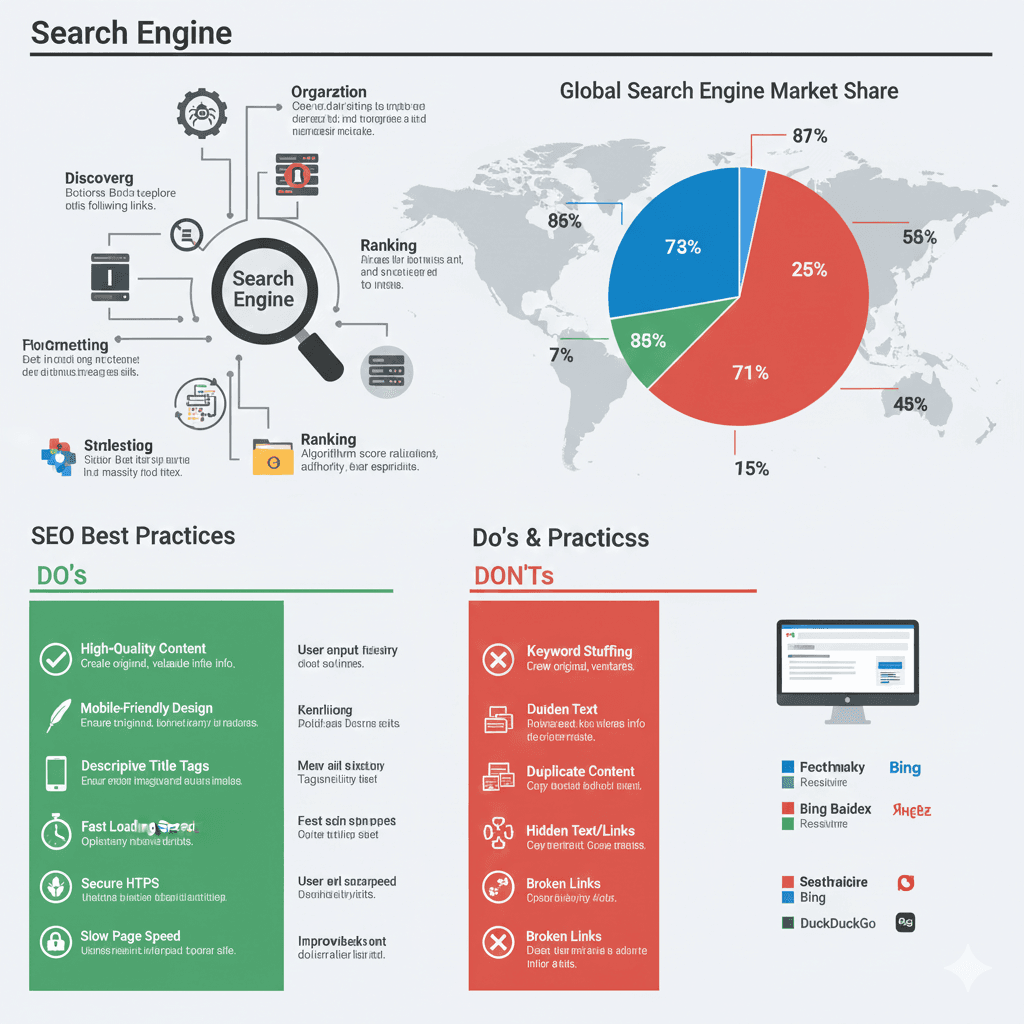
Search Engine Infographic Overview
1. The Search Engine Process
- Discovery: Bots explore websites by following links
- Organization: Pages are structured and categorized
- Storage: Information is saved in massive indexes
- Ranking: Algorithms score relevance and authority
- Formatting: Results are presented to users clearly
2. Global Search Engine Market Share
Market share data highlights Google as the dominant engine, with Bing, DuckDuckGo, and others serving niche audiences focused on privacy or regional needs.
3. SEO Best Practices (Do’s & Don’ts)
✅ Do’s
- Create high-quality, original content
- Ensure mobile-friendly design
- Use descriptive title tags
- Optimize page speed
- Secure your site with HTTPS
❌ Don’ts
- Keyword stuffing
- Duplicate or copied content
- Hidden text or links
- Broken links (404 errors)
- Poor user experience
Distribution of Search Query Types
- Navigational: 45% – Users searching for a specific website
- Informational: 35% – Users looking for knowledge
- Transactional: 20% – Users ready to take action or buy
Related Articles from Our Network
- How to Parse JSON Request Bodies in Express.js with Body-Parser(json parser)
- How to Implement JWT Authentication in Node.js with Express(json web token)
- How to Create a Mock API Fast with JSON Server for Development(fake json)
- JSON Comparison Online: Your Ultimate Guide to Efficient Data Diff(compare json)